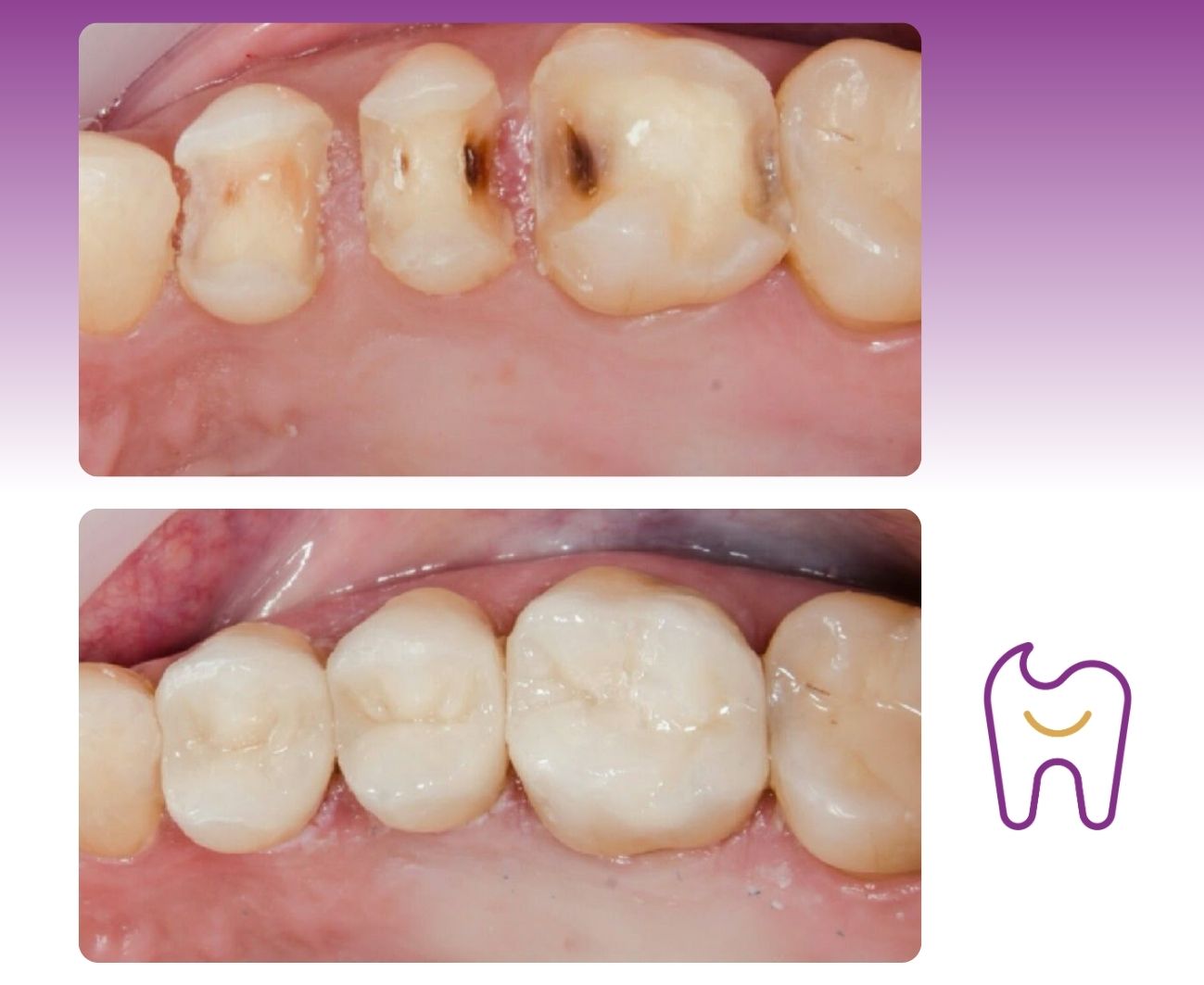
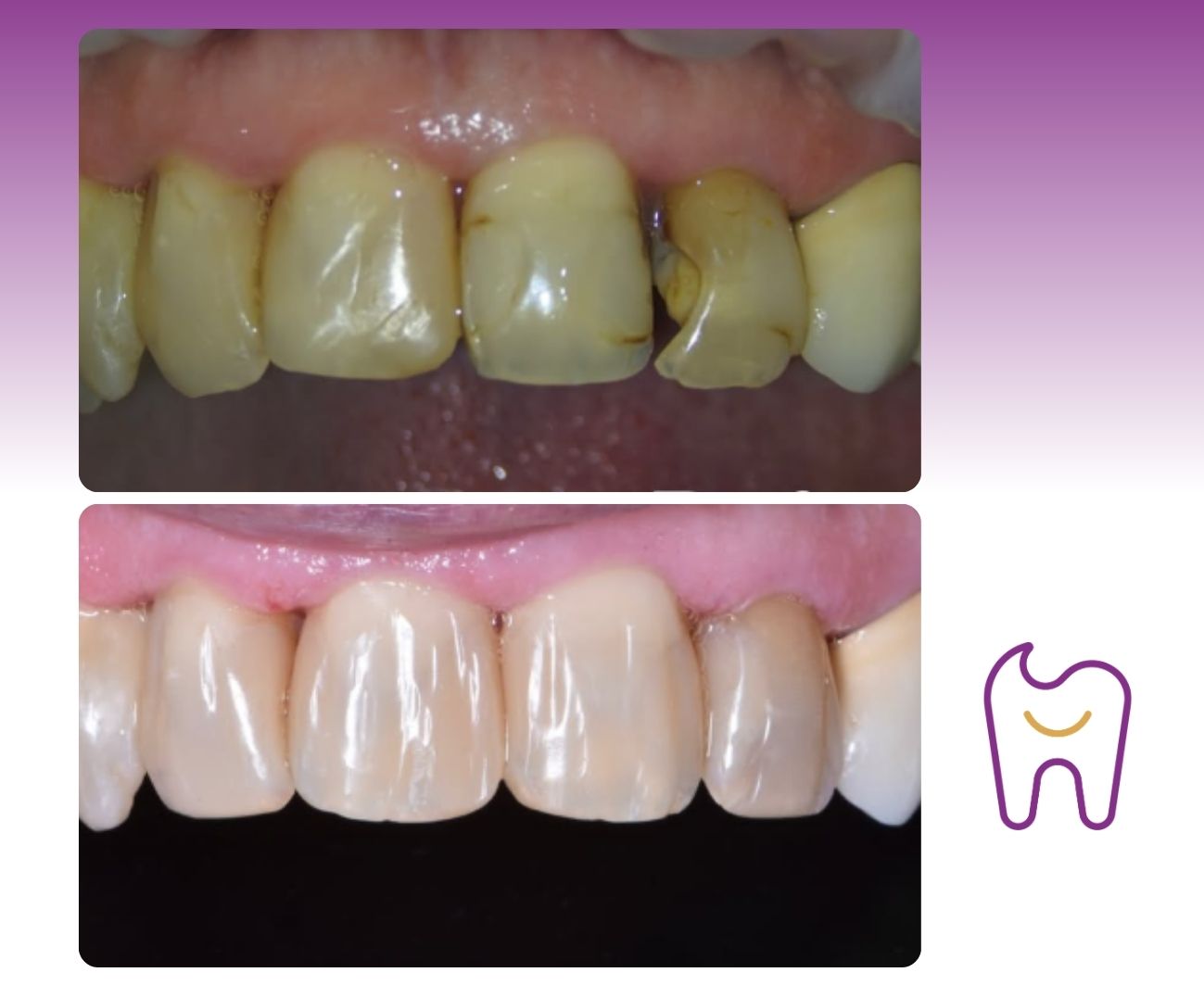
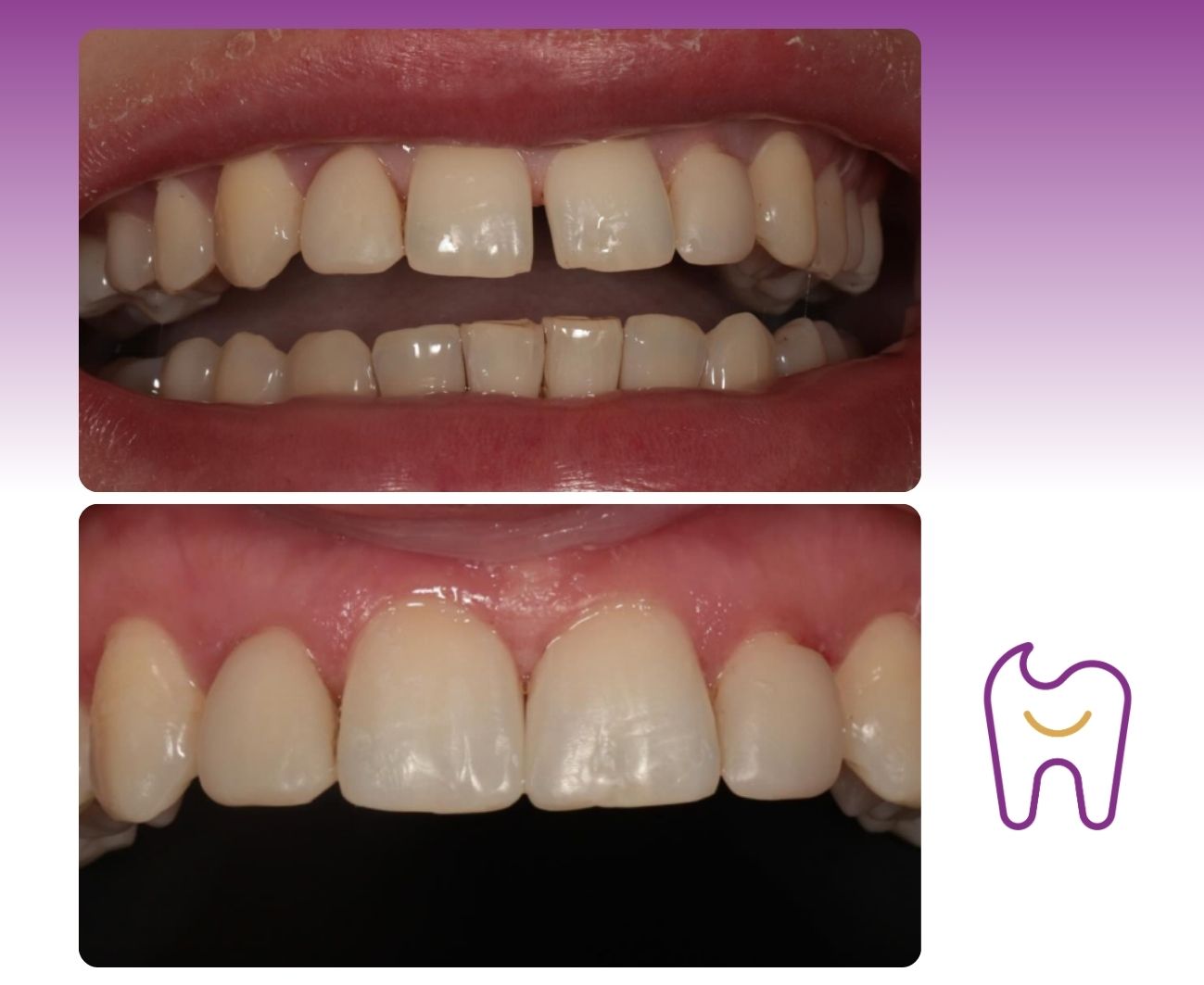
Treatment of dental caries
Treatment of dental caries: Modern, Painless and Professional.
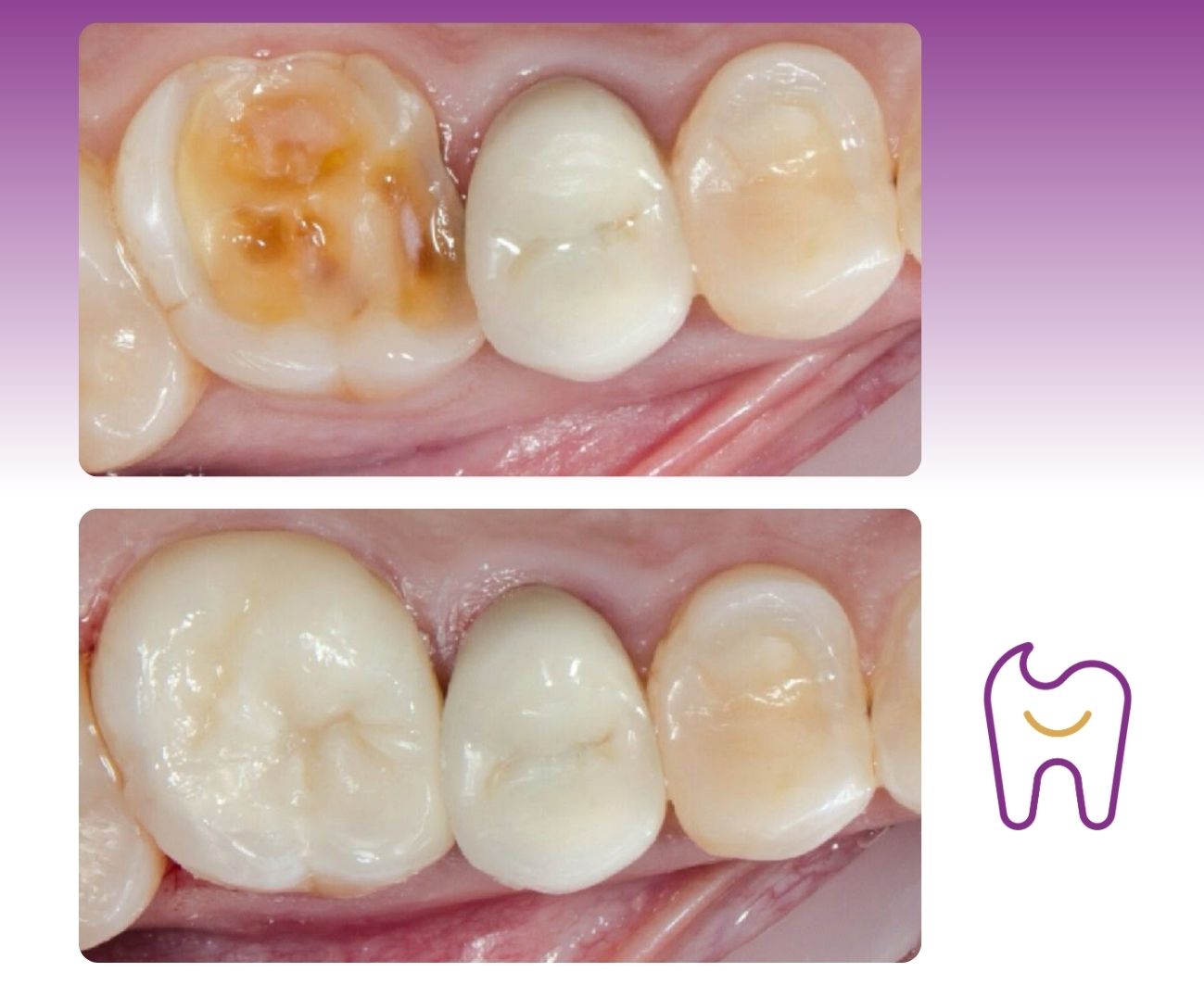
Tooth decay is the most common dental disease that can cause not only aesthetic problems but also pain and serious complications. At our Smile Centrum Praha dental practice, we offer painless cavity treatment using state-of-the-art technology, gentle methods, and high-quality fillings. Our professional dentistry focuses on preserving natural teeth, maintaining oral function, and the beauty of your smile.
Treatment of dental caries
Treatment of dental caries: Modern, Painless and Professional.
Tooth decay is the most common dental disease that can cause not only aesthetic problems but also pain and serious complications. At our Smile Centrum Praha dental practice, we offer painless cavity treatment using state-of-the-art technology, gentle methods, and high-quality fillings. Our professional dentistry focuses on preserving natural teeth, maintaining oral function, and the beauty of your smile.
Treatment of dental caries
Treatment of dental caries: Modern, Painless and Professional.
Tooth decay is the most common dental disease that can cause not only aesthetic problems but also pain and serious complications. At our Smile Centrum Praha dental practice, we offer painless cavity treatment using state-of-the-art technology, gentle methods, and high-quality fillings. Our professional dentistry focuses on preserving natural teeth, maintaining oral function, and the beauty of your smile.
How does cavity treatment proceed?
Disinfection of the tooth cavity.
How does cavity treatment proceed?
Disinfection of the tooth cavity.
How to recognize tooth decay, and what is the prevention and treatment?
Early cavities often manifest as increased sensitivity to sweets, cold or hot, or possibly pain when chewing. Deep cavities can already cause significant toothache and affect the dental pulp, which requires professional treatment and endodontics (root canal treatment).
Tooth decay most commonly occurs on posterior teeth (molars), where access for cleaning is more difficult. Therefore, regular dental hygiene, proper brushing technique, using high-quality fluoride toothpaste, and regular preventive check-ups with a dentist are important.

Deep Cavity Treatment – Root Canal Treatment
If the cavity reaches the dental pulp, endodontic treatment is necessary. Root canal treatment consists of removing the damaged pulp, disinfecting the canals and filling them with a special material. After this treatment, we recommend a crown to ensure long-term tooth preservation.
How to recognize tooth decay, and what is the prevention and treatment?
Early cavities often manifest as increased sensitivity to sweets, cold or hot, or possibly pain when chewing. Deep cavities can already cause significant toothache and affect the dental pulp, which requires professional treatment and endodontics (root canal treatment).
Tooth decay most commonly occurs on posterior teeth (molars), where access for cleaning is more difficult. Therefore, regular dental hygiene, proper brushing technique, using high-quality fluoride toothpaste, and regular preventive check-ups with a dentist are important.
Deep Cavity Treatment – Root Canal Treatment
If the cavity reaches the dental pulp, endodontic treatment is necessary. Root canal treatment consists of removing the damaged pulp, disinfecting the canals and filling them with a special material. After this treatment, we recommend a crown to ensure long-term tooth preservation.
Guarantee
A guarantee of quality and pain-free treatment

Top-tier equipment
Advanced equipment for superior care

Comprehensive Care
Comprehensive care for our patients

Opening Hours
Extended opening hours including Saturdays

Contracts
Contracts with health insurance providers

Dental laboratory
Our own modern dental laboratory

Location
Excellent transport accessibility

Reception Services
A pleasant and calm environment

Languages
We speak more than five languages

Availability
We have short waiting times for appointments
Our team
Filling Materials: Which are the best?
Our dentists always choose the material according to the type of cavity, its extent and location, so that the result is both functional and aesthetic.
Tooth Decay Prevention and Oral Hygiene Care
Filling Materials: Which are the best?
Our dentists always choose the material according to the type of cavity, its extent and location, so that the result is both functional and aesthetic.
Tooth Decay Prevention and Oral Hygiene Care
Prices for initial examination
Administrative fees
| Procedure | Details | Price |
|---|---|---|
| Administrative Fee / Medical Record Extract | 550 Kč | |
| Missed or Uncanceled Appointment (per 30 minutes) | 950 Kč | |
| Initial Examination including Panoramic X-ray | Covered by Health Insurance | |
| Preventive Check-up 2x per year | Covered by Health Insurance | |
| Initial Examination for Uninsured Patients / No Health Insurance Claim | 1950 Kč | |
| Emergency Fee for Uninsured Patients / No Health Insurance Claim | 950 Kč | |
X-ray – Examination
| Procedure | Details | Price |
|---|---|---|
| Evaluation of OPG and X-ray | Covered by Health Insurance | |
| Intraoral X-ray (for self-payers) – Taking + Evaluation | 250 Kč | |
| OPG X-ray (for self-payers) – Taking + Evaluation | 890 Kč | |
| CBCT Quadrant Scan | 1190 Kč | |
| CBCT One Jaw Scan | 1490 Kč | |
| CBCT Scan | 1790 Kč | |
Indications and Contraindications for Cavity Treatment
Cavity removal and replacement with fillings is the most common dental procedure aimed at restoring tooth function and aesthetics. Here you will find an overview of situations when this procedure is appropriate, and when it is necessary to consider another approach or postpone treatment temporarily.
Indications (When is the treatment suitable?)
1. Diagnosed tooth decay
Whether the cavity is visible to the naked eye or revealed by an X-ray (interdental cavities).
2. Sensitivity to cold/hot/sweet stimuli
Painful reactions of the tooth signaling that the cavity is already close to the pulp or that the dentin is exposed.
3. Tooth pain
Mild to moderate pain indicating advanced decay or inflammation.
4. Damaged or leaky fillings
If there is secondary decay under an old filling, or the filling is cracked or fallen out and does not fulfill its function.
5. Aesthetic requirements
Repairing small cavities that spoil the overall impression of a smile, or replacing old amalgam fillings with aesthetic white ones.
6. Prevention of cavity spread
Early removal of the cavity will prevent its spread to adjacent teeth and deeper penetration into the tooth.
7. Broken or chipped tooth
If the tooth is broken or chipped and the damage is not too extensive, it can be repaired with a filling.
Contraindications (When caution is needed?)
1. Extensive tooth destruction
If the tooth is so destroyed by decay or fracture that it cannot be reliably restored with a filling alone and requires a crown, extraction, or other prosthetic replacement.
2. Irreversible inflammation of the pulp (pulpitis) or necrosis
If the cavity has already penetrated the pulp and caused irreversible damage, root canal treatment (endodontics) is necessary, not just a filling.
3. Acute uncontrolled abscess or swelling
Severe acute inflammation in the mouth accompanied by swelling or purulent discharge requires immediate treatment and stabilization of the condition first.
4. Acute systemic infectious disease
Feverish conditions, flu, severe cold or other acute infections should lead to postponing the procedure.
5. Uncontrolled systemic diseases
Very unstable diabetes, uncontrolled high blood pressure, recent myocardial infarction – requires consultation with the attending physician and possible premedication.
6. Allergies to materials used or anesthetics
Known allergy to components of composite resins, local anesthetics, or other materials.
7. Severe dental phobia/anxiety
In case of extreme anxiety, a special approach (e.g., analgesia) may be necessary, which should be arranged in advance.
Important note: This list is general and indicative. Each case is unique and requires careful assessment by a dentist. It is always crucial to inform your dentist of your complete medical history and current health condition so that he/she can choose the safest and most effective treatment plan.
Treatment of dental caries FAQ
On this page, you’ll find answers to the most frequently asked questions from our patients. If you don’t see what you’re looking for, feel free to reach out — our team is always happy to help.
Tooth decay can manifest as sensitivity to sweets, cold or hot stimuli, toothache, or a visible dark spot. Early cavities are often not visible with the naked eye, which is why preventive check-ups and digital diagnostics at the dental practice are important.
The dentist will perform painless treatment of the tooth decay using anesthesia, remove damaged tissue by drilling, continuously monitor whether all affected tooth tissue has been removed using a caries detector, and then fill the cavity with a composite filling (white filling) or another suitable filling material, such as glass ionomer cement.
Regular professional dental hygiene and proper tooth brushing are key to healthy teeth, preventing cavities and complications. Without good oral hygiene, cavities develop more easily.
If the cavity reaches the pulp of the tooth, endodontics – root canal treatment – is necessary to save the tooth. This procedure is performed by a dentist as part of specialized care.
Painless treatment thanks to modern technologies and proper anesthesia ensures patient comfort and reduces anxiety about dental procedures, which promotes regular visits and better treatment outcomes.
Booking an appointment with the doctor or for dental hygiene is conveniently possible online through our dental practice website. Alternatively, you can book by phone on our hotline or by email. Preventive check-ups and professional treatment help prevent cavities and other complications.
Treatment of dental caries FAQ
On this page, you’ll find answers to the most frequently asked questions from our patients. If you don’t see what you’re looking for, feel free to reach out — our team is always happy to help.
Tooth decay can manifest as sensitivity to sweets, cold or hot stimuli, toothache, or a visible dark spot. Early cavities are often not visible with the naked eye, which is why preventive check-ups and digital diagnostics at the dental practice are important.
The dentist will perform painless treatment of the tooth decay using anesthesia, remove damaged tissue by drilling, continuously monitor whether all affected tooth tissue has been removed using a caries detector, and then fill the cavity with a composite filling (white filling) or another suitable filling material, such as glass ionomer cement.
Regular professional dental hygiene and proper tooth brushing are key to healthy teeth, preventing cavities and complications. Without good oral hygiene, cavities develop more easily.
If the cavity reaches the pulp of the tooth, endodontics – root canal treatment – is necessary to save the tooth. This procedure is performed by a dentist as part of specialized care.
Painless treatment thanks to modern technologies and proper anesthesia ensures patient comfort and reduces anxiety about dental procedures, which promotes regular visits and better treatment outcomes.
Booking an appointment with the doctor or for dental hygiene is conveniently possible online through our dental practice website. Alternatively, you can book by phone on our hotline or by email. Preventive check-ups and professional treatment help prevent cavities and other complications.
Hodnocení Smile Centrum
Doporučuje nás 92% našich pacientů, kteří zanechávají recenze na nezávislých portálech a sociálních sítích. Klinika je nemůže
ovlivnit, a proto jsou pro nás tak cenné.
★★★★★
★★★★★
★★★★★
★★★★★
★★★★★
★★★★★
★★★★★
★★★★★